
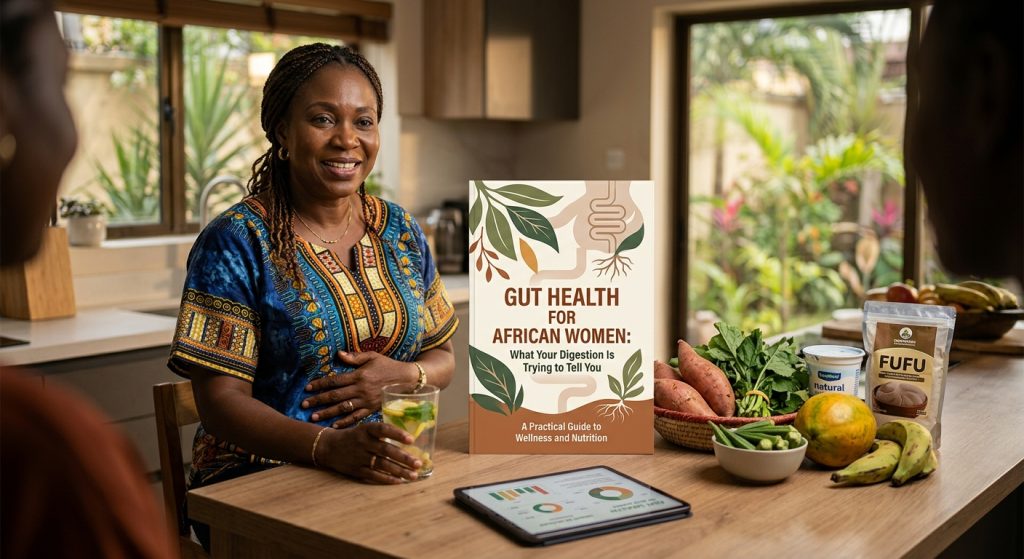
Bloating. Constipation. Stomach discomfort, Irregular bowel movements.
Many women experience these symptoms and carry on with their day.
Some blame stress. Others blame their period, pregnancy, getting older, or something they ate. And because digestive problems are often treated as an uncomfortable topic, many women suffer quietly for years.
But your digestive health deserves attention.
Your gut does much more than digest food. Your digestive system is closely connected to your immune system, metabolism, brain and overall wellbeing. The trillions of microorganisms that live in your digestive tract, collectively known as the gut microbiome, also play an important role in keeping your body functioning properly.
For African women, this conversation is particularly important as eating habits change and highly processed foods increasingly replace many traditional, fibre-rich foods.
So, What Is Your Gut Trying to Tell You?
Your body often gives you clues when something is not quite right.
Some common digestive symptoms include:
- Frequent bloating or excessive gas
- Constipation or frequent diarrhoea
- Changes in your usual bowel habits
- Abdominal discomfort or pain
- Feeling unusually full after eating
- Nausea or persistent indigestion
- Unexplained changes in weight
- Fatigue that does not seem to go away
Some people also notice changes in their skin, sleep or mood when they experience digestive problems.
However, these symptoms can have many different causes. Having one or more of them does not automatically mean you have an unhealthy gut microbiome.
The important thing is to pay attention to persistent or unusual changes rather than simply accepting them as normal.
African Food Has Always Had a Place in Gut Health
Before convenience foods became a major part of everyday diets, many African meals naturally included foods that provide dietary fibre and support a diverse gut microbiome.
Think about the foods already found in many African kitchens:
Beans.
Whole grains.
Vegetables and leafy greens.
Fruits.
Yam, sweet potatoes and other tubers.
Nuts and seeds.
Fermented foods.
These foods can provide fibre and other nutrients that support digestive health.
Fermented foods can also contain beneficial microorganisms, although the amount and type can vary depending on how the food is prepared.
The problem is not that modern foods are automatically bad. The concern is what happens when highly processed foods, sugary drinks and low-fibre meals begin to replace a wide variety of whole foods.
Your gut benefits from variety.
Feed Your Gut, Don’t Just Fill Your Stomach
One of the simplest ways to support your gut is to eat a wider variety of plant foods.
Instead of focusing only on calories or weight, think about diversity.
Add different vegetables to your meals. Eat different fruits. Rotate your grains, legumes, nuts, seeds and tubers.
Beans can be part of one meal. Oats or another whole grain can feature in another. Add vegetables to your rice, stew or soup. Snack on fruit or nuts instead of reaching for highly processed snacks every time.
The goal is not perfection.
It is variety.
Fibre Is Your Friend
Fibre helps support regular bowel movements and provides food for beneficial bacteria in the gut.
Good sources include:
- Beans and lentils
- Vegetables
- Fruits
- Whole grains
- Oats
- Nuts and seeds
- Tubers such as sweet potatoes
If your current diet is low in fibre, increase it gradually and drink enough water. A sudden increase in fibre can cause more bloating and discomfort for some people.
Don’t Forget Your Gut-Brain Connection
Have you ever had butterflies in your stomach before an important meeting?
Or noticed that stress makes your stomach feel unsettled?
There is a reason for that.
Your brain and digestive system communicate constantly through the gut-brain axis. Stress and emotional wellbeing can influence digestion, while digestive problems can also affect how you feel.
This does not mean every stomach problem is “just stress.”
It means your physical and emotional health are connected.
Getting enough sleep, staying physically active, managing stress and eating regularly can all form part of a healthier lifestyle.
What About Probiotics?
Probiotics are live microorganisms that may provide health benefits when consumed in adequate amounts. They are found in some fermented foods and are also available as supplements.
But probiotics are not a cure-all.
Different probiotic strains can have different effects, and a supplement that works for one person may not work for another.
If you are considering a probiotic supplement, particularly if you are taking medication or have an existing health condition, speak with a healthcare professional first.
And remember: a probiotic supplement cannot replace a balanced, fibre-rich diet.
When Should You See a Doctor?
Not every digestive symptom is harmless.
Speak with a healthcare professional if you have persistent or worsening digestive symptoms, particularly if you experience:
- Blood in your stool
- Unexplained weight loss
- Severe or persistent abdominal pain
- Persistent vomiting
- A significant or lasting change in bowel habits
- Difficulty swallowing
- Symptoms that repeatedly wake you from sleep
- Ongoing symptoms that interfere with your everyday life
Conditions such as irritable bowel syndrome, inflammatory bowel disease and colorectal cancer can cause digestive symptoms and require proper medical assessment.
Do not assume that persistent symptoms are simply stress, ageing or something you ate.
Start Listening to Your Gut
Gut health does not require expensive products or complicated diets.
Start with the food on your plate.
Eat more whole and minimally processed foods. Increase the variety of plants in your diet. Drink enough water. Stay active. Get enough sleep. Pay attention to your body’s patterns.
And when something does not feel right, do not ignore it.
Your body is communicating with you. Learn to listen.
What can you change this week?
Choose one meal each day and add a source of fibre, such as beans, vegetables, fruit, whole grains, nuts or seeds.
Then pay attention to how you feel.
Your gut health journey does not have to begin with a supplement.
It can begin with your next meal.