
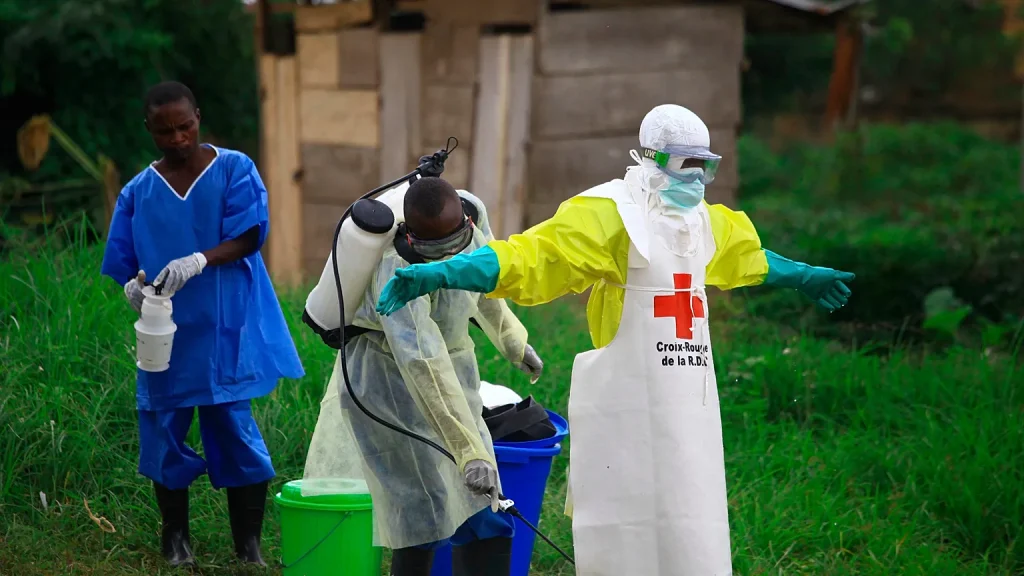
International medical organisation, Médecins Sans Frontières says health workers in the Democratic Republic of Congo are struggling to contain the current Ebola outbreak.
The latest figures show that more than 1,000 people have died in the two months since it was declared a public health emergency of international concern by the World Health Organization.
As of 22 July, more than 1,000 people have died in the outbreak in Congo, according to figures from Africa Centres for Disease Control and Prevention.
The remote Ituri province accounts for nearly 90 per cent of cases, but Ebola has been confirmed in five provinces, all in the east of the country.
The region is already dealing with conflict-related insecurity, hampering efforts to deal with the outbreak.
Twenty cases, including two deaths, have been registered in neighbouring Uganda.
MSF’s Emergency Programme Manager, Trish Newport, says the response is “not enough” and the outbreak will follow a dangerous trajectory if more is not done to stop the spread.
“We see the number of cases increasing every single day. We see more and more community deaths. We see new cases in new areas and the response today just can’t catch up to the size of the spread of the outbreak,” she says.
In addition, some provinces are inaccessible, making it impossible to track and trace people who have been in contact with Ebola.
“The people arrive very, very late, either because it takes a long time for them to get to where we are, or because it took a long for them be diagnosed with actual illness,” Newport says.
“We have many, many patients arriving that are already unconscious, and then they die quite early after they arrive.”
MSF says it has more than 1,400 staff on the ground in the DRC running treatment centres, supporting treatment capacity, and delivering essential supplies.
It says the situation has been made worse by a strike by government health workers in Bunia who are the latest group to walk off the job over unpaid salaries.
Health professionals and other frontline workers barricaded the entrance to Bunia General Hospital, saying they have not received any compensation despite working under difficult conditions.
“If we don’t have staff working because they’re not being paid, it means that work isn’t being done and there’s a lot of work that needs to be here,” says Newport.
MSF has called for an urgent scale-up of the response as the Ebola outbreak becomes the fastest-growing on record.
Viruses that cause Ebola disease spread through contact with bodily fluids such as vomit, blood and semen.
There are no specific treatments or vaccines for the Bundibugyo strain at the heart of the current outbreak. The disease is often fatal.
SOURCE: AfricaNews with AFP