
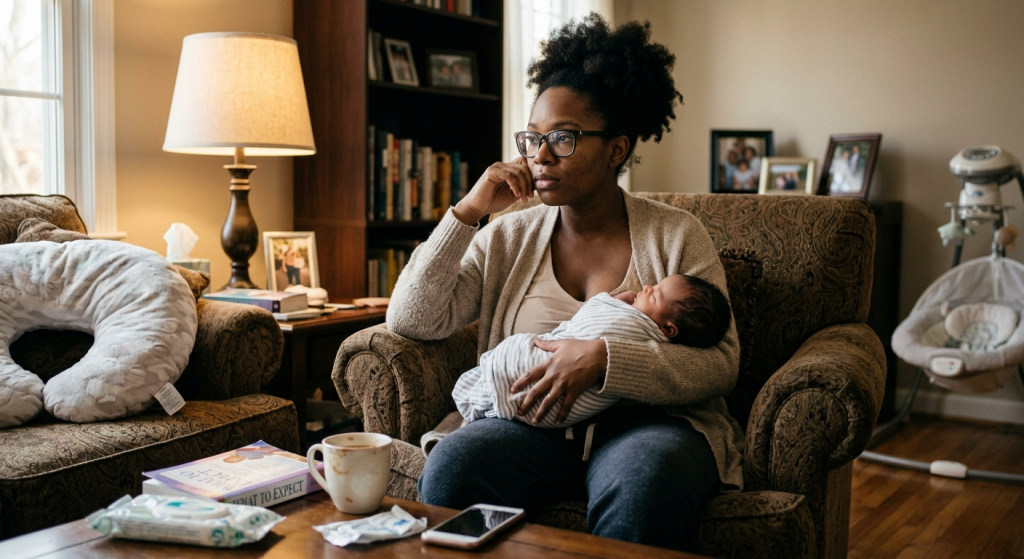
You just brought a life into the world; it is okay if you are not okay.
Introduction
In many African cultures, the birth of a child is a joyous occasion celebrated with festivities, family gatherings, and thanksgiving. A new mother is expected to be glowing, grateful, and completely devoted to her new baby.
But what happens when she is not?
What happens when the joy is mixed with or overshadowed by deep sadness, anxiety, or a terrifying sense of disconnection?
Postpartum mental health conditions are real, common, and treatable.
Yet in African communities, they remain deeply misunderstood, often dismissed as spiritual attacks, weakness, or ingratitude. This silence causes suffering. It is time to speak openly.
The Baby Blues vs Postpartum Depression
Up to 80% of new mothers experience the baby blues, a brief period of mood swings, tearfulness, and emotional sensitivity in the first week or two after birth.
This is caused by the dramatic hormonal shifts that occur after delivery and usually resolves on its own within 2 weeks.
Postpartum depression (PPD) is different.
It is more intense, longer-lasting, and can begin at any time in the first year after birth.
Symptoms include persistent sadness, loss of interest in the baby, feelings of worthlessness, inability to sleep or eat, difficulty bonding with the baby, and, in severe cases, thoughts of harming oneself or the baby.
Postpartum psychosis, while rare, is a psychiatric emergency that requires immediate medical attention.
Symptoms include hallucinations, delusions, severe confusion, and rapid mood swings.
Why African Women Are Especially Vulnerable
Several factors make African women particularly susceptible to postpartum mental health challenges: high rates of unplanned pregnancy, financial insecurity, domestic violence, lack of partner support, poor access to mental healthcare, and the enormous cultural pressure to appear strong and joyful at all times.
The expectation that women should simply cope, often described as the ‘strong African woman’ archetype, prevents many from seeking or even recognising their need for help.
What Can Help
Talk to someone you trust.
Sharing how you feel with a partner, friend, or family member can bring enormous relief.
Seek professional help from a doctor, psychologist, or trained counsellor.
Therapy and medication are both effective treatments for PPD.
Rest as much as possible.
Accept help with housework and childcare.
Eat nutritious meals and stay hydrated.
Limit isolation, even if getting out feels hard; connection with others is healing.
Religious and community support, which are deeply valued in African culture, can also provide meaningful comfort.
Speak to your pastor, imam, or community elder if that feels right for you.
But also seek clinical support, faith and medicine are not opposites.
A Message to Loved Ones
If someone you love seems to be struggling after having a baby, do not tell her to pray harder or be more grateful. Listen. Offer practical help. Accompany her to a doctor’s appointment.
Ask how she really is and mean it.
Your support could make all the difference.