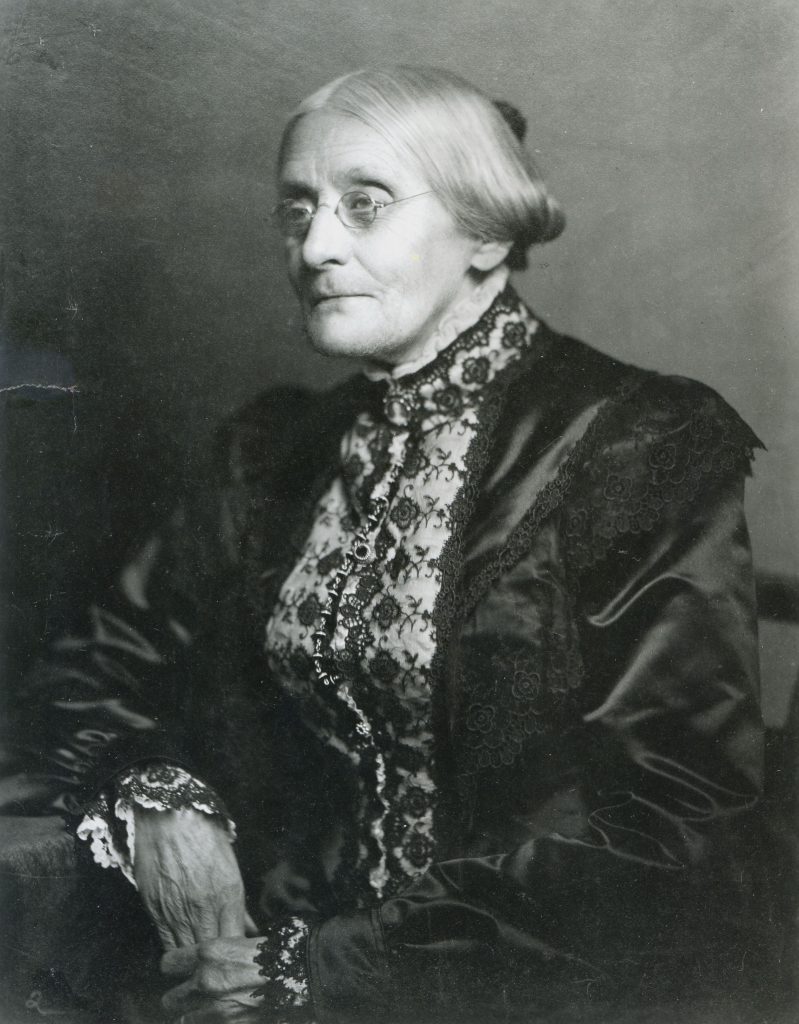
Susan B. Anthony (1820–1906) was a pioneering American reformer whose lifelong campaign for women’s rights especially the right to vote helped transform the political landscape of the United States.
Early Life and Influences
Born on February 15, 1820, in Adams, Massachusetts, Susan was raised in a Quaker family that valued equality, education, and social justice. Her upbringing shaped her strong moral convictions and belief that men and women were equal before God and the law.
As a young woman, she worked as a teacher but was frustrated by the significant pay gap between male and female educators. This early experience with inequality fueled her lifelong activism.
Abolition and Women’s Rights
Anthony first became active in the abolitionist movement, advocating for the end of slavery. During this time, she met reformers such as Frederick Douglass, who became a lifelong ally.
In 1851, Anthony formed a powerful partnership with Elizabeth Cady Stanton. While Stanton often wrote speeches and policy arguments, Anthony traveled extensively to deliver them, organize conventions, and build grassroots support. Together, they became central figures in the women’s suffrage movement.
The Fight for the Vote
After the Civil War, Anthony campaigned for universal suffrage. However, when the 14th and 15th Amendments granted citizenship and voting rights to Black men but not women, she and Stanton opposed the amendments, arguing that women’s voting rights were unjustly excluded.
In 1872, Anthony famously cast a ballot in the presidential election in Rochester, New York an illegal act at the time for women. She was arrested, tried, and fined $100. She refused to pay the fine, declaring that she had committed no crime.
Her arrest brought national attention to the women’s suffrage cause.
Organizing a Movement
Anthony helped found the National Woman Suffrage Association in 1869. For decades, she traveled across the country giving speeches, petitioning Congress, and organizing activists.
Although she did not live to see women gain the right to vote nationwide, her efforts laid the groundwork for the eventual passage of the 19th Amendment in 1920, 14 years after her death. The amendment is often referred to as the “Susan B. Anthony Amendment” in her honor.
Legacy
Susan B. Anthony died on March 13, 1906. Just before her death, she told fellow activists, “Failure is impossible.”
Her legacy endures as one of the most influential figures in American civil rights history. In 1979, she became the first woman to be featured on a U.S. circulating coin, the Susan B. Anthony dollar.
Anthony’s life reflects decades of persistence, sacrifice, and unwavering belief in equality principles that helped secure one of the most significant expansions of democratic rights in U.S. history.