
On April 4th, I delivered the 3rd Innocent Chukwuma Impact Legacy Lecture, with the title, ‘The Personal is Political: Lessons from the life of late Innocent Chukwuemeka Chukwuma’. This is an abridged version of the lecture.
I am truly honoured to be here today, to deliver the 3rd Innocent Chukwuma Impact Legacy Lecture. I thank my dear sister and friend Mrs Josephine Effah-Chukwuma, for asking me to do this. I was surprised and humbled when she told me at the 2nd Impact Legacy Lecture last year in Abuja, that I would be delivering the memorial lecture for 2025.
A lot has been written and said, about the life and times of the incomparable Innocent Chukwuma. His work as a Human Rights Activist, Social Entrepreneur, Law Enforcement Reform Specialist, Social Change Philanthropist, Civil Society Expert and Community Leader has been well documented. I laud the efforts of my sister Josephine in ensuring that Innocent’s legacy continues to endure through several initiatives which include this annual lecture series, the CLEEN Foundation, the Innocent Chukwuemeka Chukwuma Foundation, the Innocent Chukwuma Social Impact Chair and Fellowship, the annual Innocent Chukwuma Social Impact awards by the Impact Investors Foundation, the Innocent Chukwuma Library to mention just some of them.
Today, I would like to talk about Innocent Chukwuma’s legacy as a man who was committed to feminist values and principles and what lessons can be drawn from this as a social justice community.
I met Josephine Effah before I met Innocent Chukwuma. In March 1997, the African Women’s Leadership Institute (AWLI) that I established when I was based in London, as a program of Akina Mama wa Afrika in 1996, organised its first Pan-African training program in Kampala, Uganda. The AWLI was set up to provide training, information and networking opportunities for young African women between the ages of 25-40. Our thinking at the time was that this group of women would play a key role in the implementation of the Beijing Platform of Action in their various countries. Over the past 28 years, at least 10,000 women have passed through the regional, sub-regional and national programs of the AWLI. Josephine was in the first set of the AWLI. A few days into the program, she dropped a small bomb on us. She informed us that she was a new bride! Many were shocked. What kind of newly wed gets on a plane for a three-week training program, instead of a honeymoon? What kind of groom says it is okay to do this? This was a group of young women who were facing a range of challenges as they thought about settling down with partners, or navigating career and family obligations. Josephine’s story was therefore an inspiring one to them – it showed it was possible to find a kind, understanding and caring partner. A year later, in 1998, it was no surprise when Josephine showed up at an Akina Mama wa Afrika seminar in Cape Town, with baby Chidinma Chukwuma in tow.
Feminists of my generation and older, would be familiar with the slogan, ‘The Personal is Political’. The phrase was made famous by the American Feminist Activist and Thinker, Carol Hanisch in her 1969 essay, which emphasised that personal experiences and struggles are deeply connected to larger social and political structures. This saying was used to place emphasis on the link between women’s personal experiences of oppression (racism, sexism, unpaid work, gender violence, lack of control over their bodies and choices) and its implications for their status in society at large. Feminists were pushing back against being made to feel that their personal, lived experiences were irrelevant in broader societal contexts. Innocent Chukwuma was one of the rare men, who understood that there could be no justice and progress in society if women were missing from the equation. Innocent firmly believed that his life’s work for human rights and social justice would be just hypocrisy and rhetoric, if his personal life, choices and values did not reflect his public beliefs and vice versa. Innocent was an unapologetic male Feminist.
My own definition of feminism is one that challenges patriarchal power and values that deprive women and girls of their personhood. The kind that creates opportunities and a voice for everyone. The kind that gives women control over their minds and bodies. The kind that brings real change in the lives of women and girls, not fodder for sterile debates and fuel for misogynists. The kind that the late Innocent Chukwuma firmly believed in and lived by. For those who derive pleasure in pathologizing Feminists, please note – Feminists are not to blame for poverty, insecurity, kidnappings, unemployment, corruption, sexual violence, religious intolerance and xenophobia, all symptoms of fundamental inequities and systemic dysfunction. For those who understand Feminism to mean being rude, uncouth, exhibitionist behaviour, misandry (hating men) and so on, I am familiar with these sentiments, but I do not share them.
In order for us to adequately address patriarchal structures and systems, we need to engage proactively with its custodians and beneficiaries – men. We need men as allies. Men are in a position to use their power, influence and authority to show other men the implications of a society wanting to clap with one hand. Men should be able to help other men unlearn the entitlements they have become accustomed to and the privileges that masculinity bestows on them. In the words of the late Thomas Sankara, ‘Comrades, there is no true social revolution without the liberation of women. May my eyes never see and my feet never take me to a society where half the people are held in silence. I hear the roar of women’s silence’. To go back to the words of Carol Hanisch, ‘One of the first things we discover…… is that personal problems are political problems. There are no personal solutions at this time. There is only collective action for a collective solution’.
Innocent Chukwuma believed that social change was not possible without collective struggles and action. In all this, women had to play a central role, they could not be on the margins, and they could not be silenced. He was a disciplined, contented man, who earned respect not because of what he had in his pocket but what he carried in his heart. He served as a reminder that true leaders do not use their power to coerce or force others into submission. They use whatever spaces they occupy to influence change, foster collaboration, bring in marginalised faces and voices and work towards a shared goal.
All of us here are in a position to provide solutions. Together, we can commit to a combination of the following:
- Seek accountability for all the commitments made to guarantee gender equality and women’s empowerment. This includes ongoing advocacy for legislative and policy frameworks and political will for implementation
- Strive to bring up our boys differently, so that they can minimise their sense of entitlement to women’s labour, bodies and to leadership spaces
- Create a level playing field so that boys and girls can receive a qualitative education. This means removing barriers girls face in education such as sexual exploitation, bullying, period poverty and multiple domestic burdens.
- Sensitisation and awareness raising with faith and traditional institutions, custodians of male power and privilege, so that they do not continue to fuel and justify toxic masculinity
- Mentoring of young men, particularly by other men, so that they can have a more transformative worldview
- Mentoring of young women, so that they stop perpetuating gender stereotypes and refrain from allowing themselves to be coopted into patriarchal projects
- Programs in schools and online to address the ongoing ‘Gender Wars’. Men and women are not at war. We will however continue to fight injustice, discrimination, gaslighting and disrespect. We need a culture of mutual respect for both men and women.
I would like to end this presentation with an imaginary love letter from Josephine to Innocent. I am sure, every now and then, Josephine has conversations with Innocent. In this letter, let us imagine Josephine keeping Innocent updated on what has been happening in her life.
My darling Innocent,
I dreamt of you last night, and I decided to write this quick message to you before I head out for Project Alert’s training workshop with Police Officers. I have just returned from Abuja where I went to attend a mentoring program with young African feminists across West Africa. During one of the sessions, a young women asked if it was indeed possible to find a man who truly believed that women could be equal and who would be fully committed to treating women with fairness and respect. I told the young women that yes, it was possible, because that was my own experience. It might not be a common one, but I had a spouse who loved me unconditionally, who treated me with respect, who loved all his three daughters more than life itself and who made every single day we shared special. Innocent my dear, life has been so painful without you. However, I take solace in the fact that you lived a truly exemplary life. To the world out there, you were this great leader, achiever, activist, man of many accomplishments. To me, you were simply my ‘Odogwu’. You were strong, capable and incredibly wealthy, not necessarily with material things, but in character, compassion and courage. A man who practiced what he preached. When I listen to how some men talk to and about women these days, I think of you, and I promise myself that I and your daughters will continue to tell the world what a great man you were. I always remind our daughters never to become ‘Pick me’ women. I say to them, ‘You are worthy. You are enough. You are beautiful, inside out’. I tell them this because with you, I always felt worthy, I was always enough and I was beautiful in all ways. Thank you for everything my love. Let me run now before I am late. I will love you forever’
Josephine
Rest in peace dear Innocent. Thank you for all that you did and for the uncountable lives you touched. May God Almighty continue to watch over those you have left behind.
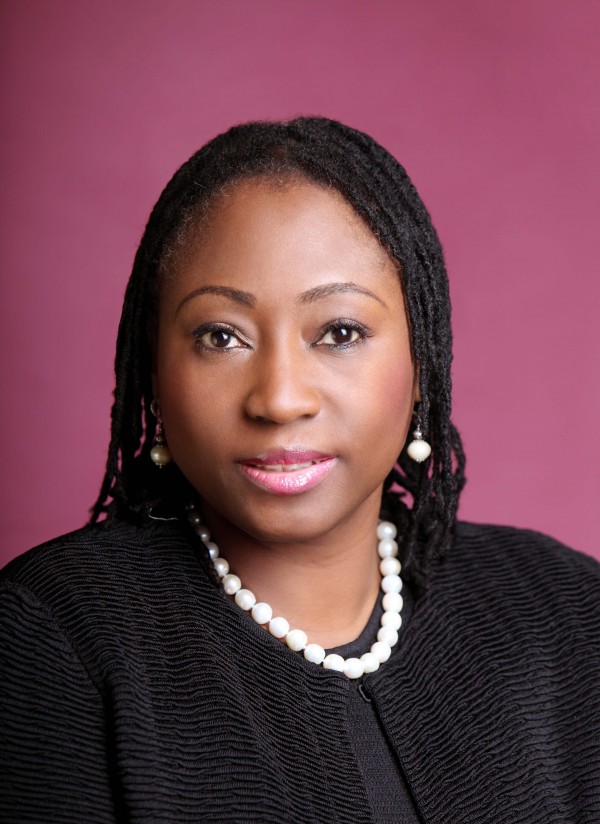
Bisi Adeleye-Fayemi is a Gender Specialist, Policy Advocate and Writer. She is the Founder of Abovewhispers.com, an online community for women. She can be reached at BAF@abovewhispers.com
One Response
May his soul rest in peace.