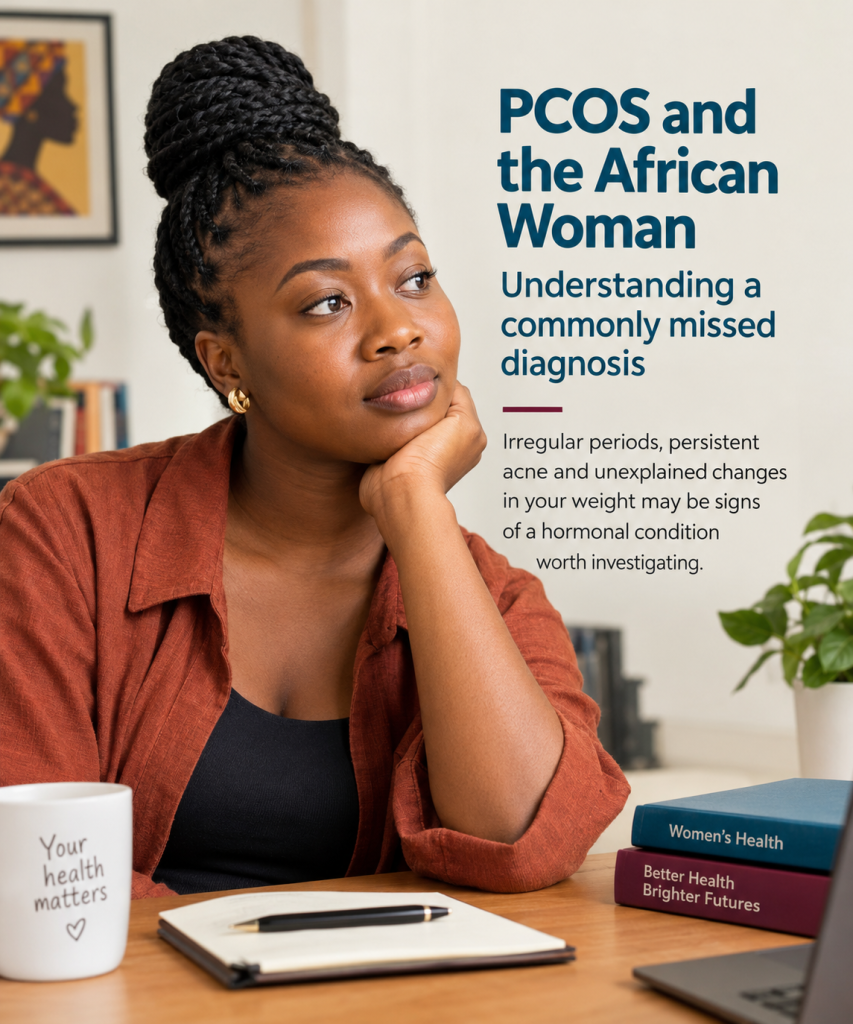
Irregular periods, persistent acne, and unexplained weight changes may be signs of a hormonal condition that warrants investigation.
Introduction
Have you ever wondered why your periods are unpredictable, your acne keeps returning, or you are struggling to get pregnant despite trying for months?
These symptoms can have several causes, but one possibility is Polycystic Ovary Syndrome (PCOS).
PCOS is a common hormonal condition affecting an estimated 10 to 13 per cent of women of reproductive age worldwide. The World Health Organisation estimates that up to 70 per cent of women living with PCOS have not been diagnosed. This means many women may be dealing with symptoms without knowing what is causing them.
For African women, the experience can be particularly frustrating when irregular periods, unwanted facial hair or difficulty conceiving are dismissed, misunderstood or treated as problems to be endured.
Understanding PCOS can help you recognise the signs, seek medical advice and make informed decisions about your health.
What Is PCOS?
Polycystic Ovary Syndrome is a hormonal condition that affects how the ovaries function. It is associated with higher levels of androgens, hormones that are present in all women but may be elevated in women with PCOS.
The condition can interfere with ovulation, which is the release of an egg during the menstrual cycle. This can lead to irregular periods and difficulties getting pregnant.
Despite its name, PCOS does not mean you must have ovarian cysts. Some women with the condition have ovaries that appear normal on an ultrasound scan.
The exact cause of PCOS is not fully understood. Genetics, hormonal changes and metabolic factors, including insulin resistance, are thought to play a role.
Signs and Symptoms to Look Out For
PCOS affects women differently. Some experience several symptoms, while others notice only one or two.
Common signs include:
- Irregular or missed periods: Your periods may come months apart or stop for a while.
- Unwanted facial or body hair: You may notice more hair growing on your chin, upper lip, chest or abdomen.
- Persistent acne: Breakouts may continue into adulthood, particularly around the jawline and chin.
- Hair thinning: Hair on your scalp may become thinner, especially around the crown.
- Difficulty getting pregnant: Irregular ovulation can make conception more difficult.
- Weight changes: Some women experience weight gain or find weight management challenging, although PCOS can affect women of different body sizes.
- Darkened skin: Dark, velvety patches around the neck, armpits or groin may indicate insulin resistance.
These symptoms do not automatically mean you have PCOS. Other health conditions can cause similar changes, so proper assessment is important.
If your periods are consistently irregular, you go several months without menstruating, or you notice persistent acne or unusual hair growth, speak with a qualified healthcare professional.
Why PCOS May Go Undiagnosed
Many women grow up believing that irregular periods are simply part of being a woman. Others may be told to lose weight, reduce stress or wait until they are ready to have children before seeking medical attention.
While stress and weight changes can affect menstrual cycles, they do not explain every case.
PCOS can also be overlooked because its symptoms vary. A woman may have regular periods but experience excess facial hair. Another may struggle with acne and irregular ovulation without gaining weight.
In some communities, conversations about reproductive health remain difficult, particularly when fertility is involved. This can discourage women from seeking help or asking questions about symptoms they find embarrassing.
The important thing to remember is that you do not have to wait until you want to become pregnant before investigating possible PCOS.
Early assessment can help identify symptoms, address metabolic risks and support your long-term health.
How Is PCOS Diagnosed?
There is no single test that confirms PCOS in every woman.
For adults, healthcare professionals generally consider three features:
- Irregular or absent ovulation, often reflected in irregular menstrual cycles.
- Signs of elevated androgen levels, such as excess facial hair, or blood tests showing higher androgen levels.
- Ovaries with a polycystic appearance on ultrasound, or, in appropriate adult cases, an anti-Müllerian hormone test used as an alternative to ultrasound.
A diagnosis generally requires two of these three features after other possible causes have been excluded.
Your doctor may ask about your menstrual history, examine you for symptoms, and request blood tests. Depending on your circumstances, you may also need an ultrasound or tests to assess blood sugar, cholesterol and thyroid function.
Not every woman needs an ultrasound to be diagnosed. Adolescents also require different diagnostic criteria because irregular periods and acne can be common during puberty.
If you suspect PCOS, consider keeping a record of your periods, symptoms and any changes you notice before your appointment.
PCOS and Fertility: Can You Still Get Pregnant?
A PCOS diagnosis does not mean you cannot have children.
PCOS is one of the leading causes of infertility related to problems with ovulation. When ovulation occurs irregularly or does not occur at all, identifying the fertile window can be difficult.
However, many women with PCOS conceive, either naturally or with treatment.
Depending on your circumstances, treatment may include medication to encourage ovulation. Letrozole is recommended as the first-line medicine for women with PCOS who are experiencing infertility due to anovulation and have no other identified infertility factors. Other options may be considered when appropriate.
Some women may need additional fertility treatment, including assisted reproductive techniques.
If you are trying to conceive, speak with a healthcare professional rather than assuming PCOS is the only possible cause of fertility difficulties. Both partners may need assessment, and treatment should be tailored to your needs.
You deserve support throughout the process, not blame or pressure.
Managing PCOS: What Can Help?
There is currently no cure for PCOS, but its symptoms and associated health risks can be managed.
The right approach depends on your symptoms, medical history and whether you are planning a pregnancy.
1. Build healthy eating habits
You do not need an expensive diet or special imported foods to manage PCOS.
Aim for balanced meals that include vegetables, fruits, beans, whole grains, protein sources and healthy fats. In a Nigerian or wider African context, options may include beans, moi moi, vegetables, fish, eggs, unrefined grains and other locally available foods.
Reducing excessive intake of sugary drinks and highly processed foods may also support metabolic health.
There is no single diet proven to be best for every woman with PCOS. Choose an approach that is nutritious, affordable and sustainable.
2. Stay physically active
Regular physical activity can support insulin sensitivity, cardiovascular health, mood and overall wellbeing.
Walking, dancing, cycling, swimming or other activities you enjoy can be useful. Start at a level that suits your current fitness and build gradually.
You do not have to follow an intense exercise routine to benefit.
3. Understand the role of weight
Weight management may improve some symptoms and metabolic outcomes for women who are above their healthy weight range. However, PCOS also affects women who are slim or within a healthy weight range.
Healthy eating and physical activity can be beneficial even when your weight does not change.
Your care should focus on your overall health, not shame or unrealistic expectations about your body.
4. Get enough sleep and look after your emotional wellbeing
Living with persistent symptoms, concerns about fertility or changes in body image can be emotionally exhausting.
Aim for a consistent sleep routine and seek support if anxiety, low mood or stress begins to affect your daily life. Women with PCOS are at increased risk of anxiety and depression, and these concerns deserve attention alongside physical symptoms.
5. Discuss medication with your doctor
Depending on your needs, a healthcare professional may recommend medication to regulate periods, manage acne or unwanted hair growth, improve metabolic health, or support fertility.
Metformin may be appropriate for some women, particularly when metabolic concerns are present. It is not necessary for every woman with PCOS.
Do not start hormonal medication, metformin or fertility drugs without medical guidance.
What Happens If PCOS Is Left Unmanaged?
PCOS is not only a reproductive health condition. It can also affect metabolic health over time.
Women with PCOS have an increased risk of insulin resistance, type 2 diabetes and other cardiovascular risk factors. Prolonged gaps between periods can also increase the risk of excessive thickening of the uterine lining.
This does not mean every woman with PCOS will develop these complications. It means that appropriate follow-up matters, even if your symptoms appear manageable.
Your healthcare professional can advise you on monitoring your blood pressure, blood sugar, cholesterol and menstrual health based on your individual risk.
A Practical Example: When Irregular Periods Need Attention
Consider Ada, a fictional 29-year-old woman who lives in Lagos.
For several years, Ada’s periods have arrived unpredictably. She has also struggled with persistent acne and noticed more hair growing around her chin. She attributes the symptoms to stress and spends money on various skincare products.
When she decides to become pregnant, she discovers that tracking her menstrual cycle is difficult because she cannot predict when she will ovulate.
Instead of continuing to guess, Ada visits a healthcare professional. After reviewing her symptoms, carrying out appropriate tests and ruling out other possible causes, she receives a diagnosis of PCOS.
She is given a management plan based on her symptoms and fertility goals.
Ada’s story illustrates why persistent symptoms deserve attention. The lesson is not that every woman with irregular periods has PCOS, but that seeking the right assessment can help you understand what is happening and what to do next.
Final Thoughts: Your Symptoms Deserve Attention
PCOS can be frustrating, particularly when you do not have clear answers about your body. But a diagnosis does not define your future, and it does not automatically mean you will struggle to conceive.
The first step is to pay attention to persistent changes, ask questions and seek appropriate medical care.
You do not have to wait until you are trying to have a baby. You do not have to feel embarrassed about unwanted hair or acne. And you do not have to blame yourself for changes in your weight.
Your health matters at every stage of life. Understanding your body is a good place to start.
Your Next Step
Have your periods become irregular? Are you experiencing persistent acne, unusual hair growth or difficulty conceiving?
Speak with a qualified healthcare professional about your symptoms and whether a PCOS assessment may be appropriate.
Share this article with a woman who may need the information. A conversation could help her take the next step towards understanding her health.
Medical note: This article is for educational purposes and does not replace a professional diagnosis or individual medical advice.