
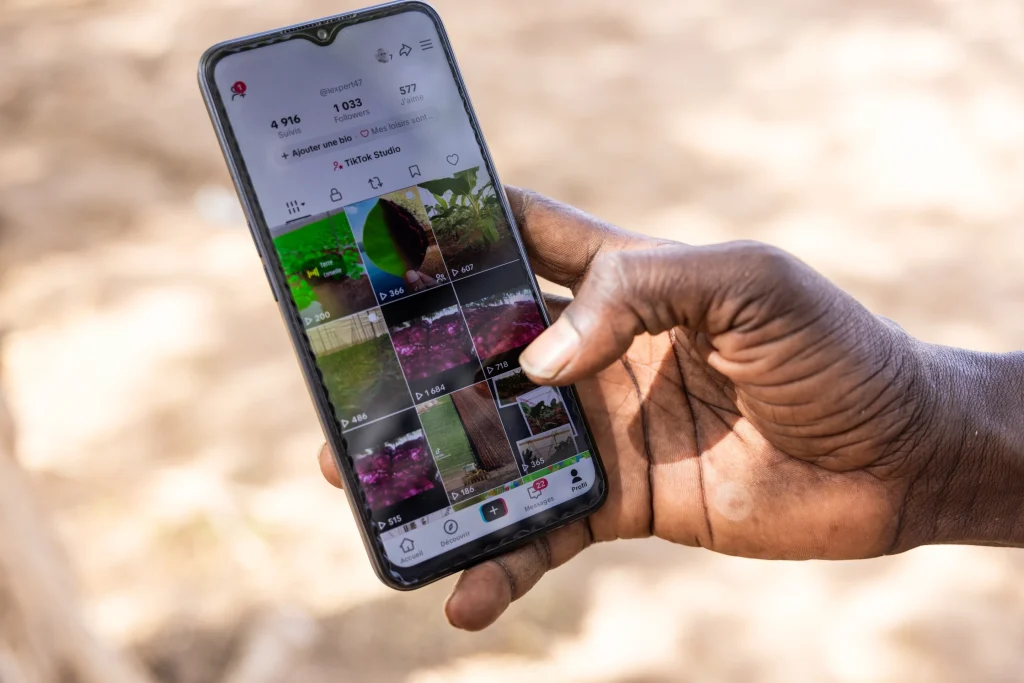
What began as casual scrolling for football clips and comedy skits has evolved into a thriving marketplace for Senegalese farmer Pape Fall, who now sells most of his produce through TikTok.
A pinned video on Fall’s profile shows heaps of freshly harvested cucumbers accompanied by mellow Senegalese rap music. The caption reads: “1.5 tonnes, available tomorrow, God willing,” alongside his phone number. Within hours, potential buyers typically begin to call.
Fall is among a growing number of farmers across West Africa who are leveraging social media platforms particularly TikTok to market produce, exchange farming tips and reshape perceptions of agriculture in a region long associated with subsistence farming and poverty.
Experts say the trend is transforming how farmers access information and customers, even as the region grapples with hunger, poverty and reduced foreign aid from the United States and other donors.
From entertainment to enterprise
Two years ago, Fall used TikTok purely for entertainment. Today, he studies videos posted by farmers from Morocco to Asia, applying new techniques to improve his harvest.
He recalls watching a Moroccan farmer warn against cutting the lower stems of cucumber plants, a common mistake that reduces yields. Fall adopted the advice and says his output improved.
“Social media is democratizing access to information for farmers,” said Abbie Phatty-Jobe, a digital agriculture specialist with Caribou, a U.K.-based research firm that has studied how African farmers use TikTok.
Caribou has helped build a network of 24 agri-influencers across 11 African countries whose combined reach is estimated at five million people. Their content simplifies scientific research and farming innovations for everyday producers.
According to a 2017 study by the International Food Policy Research Institute, the average annual income for a Senegalese farm is around $1,000. However, more entrepreneurial farmers can earn between $3,000 and $4,500, particularly when they gain direct market access.
Different regions, different platforms
Social media preferences vary across Africa. In West Africa, TikTok’s video format and support for local languages have made it popular among farmers. In East Africa, where literacy levels are generally higher, many farmers rely more on Facebook’s text-based posts, experts say.
Among Senegal’s prominent agri-influencers is Nogaye Sene, a 29-year-old entrepreneur who manages farmland for investors, including members of the Senegalese diaspora.
Sene says Instagram and TikTok account for about 70 percent of her clientele. Her content covers topics ranging from chili cultivation to tractor operation and modern farming technology areas where low mechanization has traditionally hindered productivity.
“We’re not used to seeing this type of modern production in Senegal, but social media is helping to show that agriculture can be profitable,” she said.
To encourage more women to enter farming, Sene recently helped organize training for 50 women focused on both agricultural techniques and digital marketing. Farming in the region remains largely male-dominated.
Risks and limitations
Despite its benefits, the digital shift carries risks. Sene says many of her clients report being scammed by individuals posing as agricultural consultants online.
Phatty-Jobe recommends partnerships between influencers, research institutions and government extension services to curb misinformation and fraud.
Access also remains uneven. Nicolas Paget, a digital agriculture researcher at the French institute CIRAD, estimates that up to 80 percent of farmers he has encountered lack smartphones capable of running apps like TikTok and Instagram. For those who do have access, mobile data costs remain high compared to Europe.
“There is a very high risk of excluding farmers if governments and development agencies focus only on this type of technology,” Paget warned.
In 2023, the World Bank invested $57.4 million in a digital agriculture platform in Ivory Coast to improve market access and input purchases. However, Paget said many farmers prefer adapting existing mainstream apps rather than using tailor-made platforms.
Cutting out middlemen
For farmers like Fall, posting videos of cucumbers may seem simple, but experts say it represents a significant shift. By selling directly to customers, farmers can bypass middlemen who traditionally dictate prices.
In a region where smallholder farmers often struggle with low margins, social media is increasingly becoming more than just a communication tool it is emerging as a gateway to higher incomes, improved farming practices and a new generation of tech-savvy agricultural entrepreneurs.
Source: APNews