
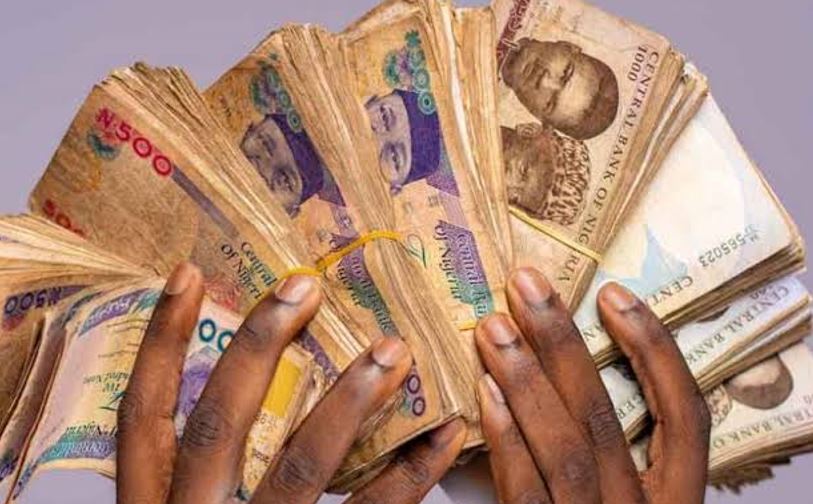
The naira closed the trading week on a weaker note at the official foreign exchange market, settling at N1,421.9 per dollar, even as the U.S. dollar softened in global markets.
Data from the Central Bank of Nigeria (CBN) and Nairametrics research show that the local currency posted marginal losses during the week, underscoring persistent domestic supply constraints that continue to outweigh supportive global conditions.
The naira’s performance reflects ongoing distortions in Nigeria’s foreign exchange market, with pressure visible across both the official and parallel segments.
Thin liquidity weighs on official market
CBN data indicate that the naira experienced mild but consistent depreciation at the official market, failing to hold on to modest gains recorded earlier in the week amid thin FX liquidity.
The currency closed at N1,421.9/$ on Friday, compared with N1,421.5/$ on Thursday and N1,423/$ on Wednesday. It traded at N1,420/$ on Tuesday and N1,420.5/$ on Monday, after opening the week at N1,425/$. On a week-on-week basis, the naira weakened from last Friday’s closing rate of N1,417.95/$.
In the parallel market, the naira also depreciated slightly, closing at N1,491/$ on Friday from N1,490/$ a day earlier. Weekly trading ranged between N1,483/$ and N1,491/$, widening the gap between the official and parallel markets to about N70 per dollar.
Why the naira lagged global trends
Speaking to Nairametrics, Lagos-based currency trading expert Dayo Omole said global dollar movements do not always translate into naira strength due to Nigeria’s structural FX challenges.
“Nigeria has restrictions on foreign currency access and a limited dollar supply, so the naira may not strengthen as much in the parallel market,” Omole said. “Sometimes, the parallel market rate can even move differently due to supply and demand pressures that are unrelated to the dollar’s global value.”
He added that when the dollar weakens globally but FX supply challenges persist locally, the divergence between official and street rates tends to widen.
Strain persists despite reforms
Nigeria’s FX market has remained under pressure following years of controls, multiple exchange rates and constrained dollar inflows. While recent CBN reforms are aimed at improving transparency and price discovery, structural bottlenecks continue to limit liquidity.
FX supply remains weak due to softer oil export receipts, subdued foreign portfolio inflows and inconsistent diaspora remittances. The wide spread between official and parallel market rates continues to reflect unmet demand and lingering confidence concerns.
What to watch
Nigeria’s external buffers offer some short-term support, even as liquidity challenges persist. External reserves stood at $45.9 billion last week, according to the CBN, providing limited room for intervention.
The International Monetary Fund recently upgraded Nigeria’s 2026 growth forecast to 4.4 per cent from 4.2 per cent, citing optimism around ongoing reforms. However, global FX volatility driven by geopolitical risks and U.S. policy uncertainty continues to affect frontier currencies like the naira, despite the recent weakness in the dollar.
Culled from: Nairametrics