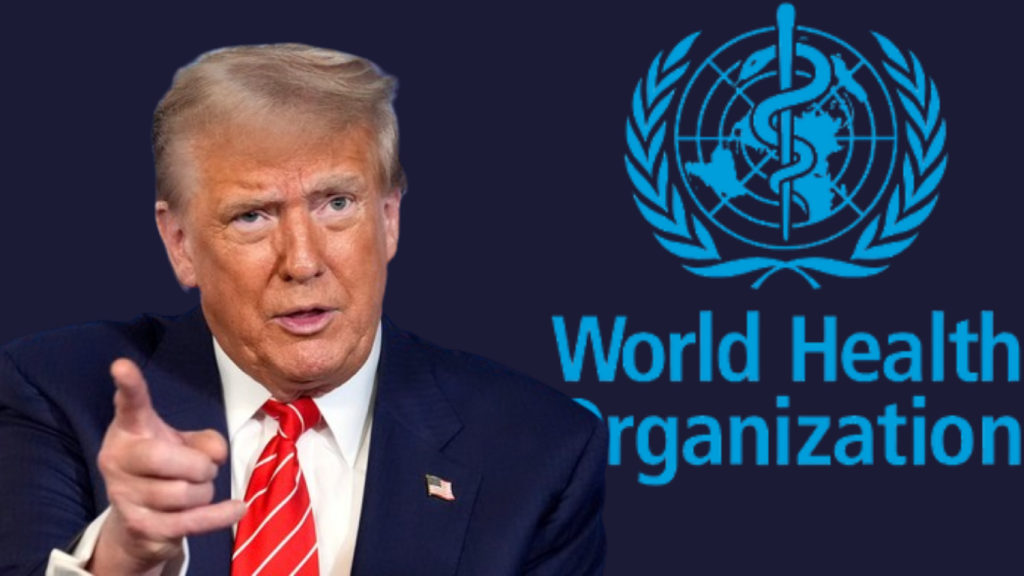
The United States has formally withdrawn from the World Health Organization (WHO), ending its membership after months of warnings from global health experts about the potential consequences for public health at home and abroad.
The exit follows an executive order signed by President Donald Trump on the first day of his new term in 2025, citing what the administration described as the WHO’s failures in handling the COVID-19 pandemic. U.S. health and State Department officials said Washington would now engage with the agency only in a limited capacity to complete the withdrawal process.
A senior U.S. health official said the country has no plans to remain involved with the WHO as an observer or to rejoin in the future. Instead, the United States intends to work directly with individual countries on disease surveillance and other public health priorities, bypassing multilateral structures.
The decision has reignited a dispute over unpaid U.S. contributions, estimated at about $260 million. While U.S. law requires a one-year notice period and settlement of outstanding dues before withdrawal, State Department officials argue the statute does not make payment a condition for leaving. “The American people have paid more than enough,” a spokesperson said, adding that funding transfers to the WHO have been halted.
Witnesses in Geneva confirmed that the U.S. flag was removed from outside WHO headquarters on Thursday, underscoring the finality of the move. The withdrawal comes amid a broader U.S. pullback from several United Nations bodies, raising concerns among diplomats that Washington’s actions could weaken the multilateral system.
The WHO has said the U.S. has not paid its assessed fees for 2024 and 2025, and member states are expected to debate how to manage the departure at the agency’s executive board meeting in February. Legal experts have questioned the legality of the withdrawal without payment, though some say the administration is unlikely to face consequences.
The U.S. exit has triggered a major financial crisis at the WHO. Washington previously accounted for about 18 percent of the agency’s funding, forcing the organization to cut its management team by half, reduce programmes and prepare to lay off roughly a quarter of its staff by mid-year.
Global health leaders have urged the U.S. to reconsider. WHO Director-General Tedros Adhanom Ghebreyesus has warned that the decision could weaken global disease detection and response systems. Bill Gates, chair of the Gates Foundation, said he does not expect a quick reversal but stressed that the world still needs the WHO.
Public health experts say the withdrawal poses risks not only to global health coordination but also to the United States itself. “It could weaken the systems the world relies on to detect, prevent and respond to health threats,” said Kelly Henning of Bloomberg Philanthropies.
Despite ongoing information sharing during the transition period, it remains unclear how U.S.–WHO collaboration will function going forward as the world faces rising health emergencies and pandemic risks.
Source: Reuters