
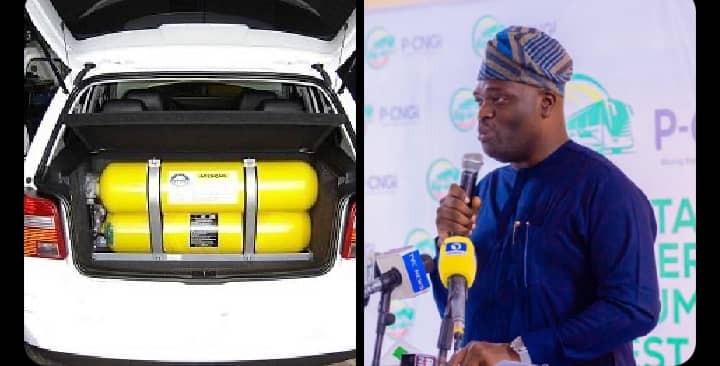
The cost of Compressed Natural Gas (CNG) in Nigeria has surged to N450 per Standard Cubic Metre (SCM) following the Federal Government’s decision to reduce subsidies. This marks a sharp increase from N230/SCM, raising concerns among drivers, transporters, and ordinary Nigerians who had turned to CNG as a cheaper alternative to petrol and diesel.
Price Hike and Dual Tariffs
Retailers confirmed that while truck drivers now pay the full N450/SCM, commercial drivers and private car owners still enjoy partial subsidies, paying N380/SCM. Officials of the Presidential Compressed Natural Gas Initiative (PCNGI) explained that the subsidy for commercial vehicles is meant to prevent a drastic rise in transportation costs.> “The refuelling stations now sell at different prices for cars and trucks. Trucks transporting goods pay higher prices, while buses and private cars still get subsidies,” a PCNGI source told reporters.
Limited Stations and Long Queues
Despite the push for CNG adoption, Nigerians continue to face long queues at refilling stations due to insufficient infrastructure. Many vehicle owners who invested over N1.5 million to convert their petrol-powered vehicles now worry about the rising cost and availability of CNG.
Adeyemi Paul, a ride-hailing driver, expressed frustration:> “Some stations have queues stretching over 1.5km. If prices keep going up and stations remain scarce, many people will go back to petrol.”Government’s position.
The NNPC Gas Marketing Limited (NGML) reportedly approved the new prices. Industry insiders warn that the cost of CNG may rise further to N500 or N600/SCM in coming months, in a bid to attract investors. Defending the initiative, Michael Oluwagbemi, CEO and Programme Director of PCNGI, highlighted the government’s achievements in expanding CNG use since the removal of petrol subsidies in 2023.
The number of CNG-powered vehicles has grown from fewer than 4,000 to nearly 100,000 in just over a year.Conversion centres have expanded from 7 in 2023 to 265 nationwide today. The country now has 60 operational refuelling stations, with 175 more under construction. Over 10,000 direct jobs have been created through the initiative.
Oluwagbemi acknowledged current challenges but insisted that progress is ongoing:> “Rome wasn’t built in a day. Those who led Nigeria into the fuel subsidy crisis cannot fairly criticize the speed at which we’re addressing it.”
Rising Concerns Over Sustainability
While the Federal Government continues to promote CNG as a cleaner and cheaper alternative to petrol, the recent price hike and inadequate refueling infrastructure risk discouraging adoption. Nigerians who embraced the transition to CNG are now questioning whether the promised long-term savings will materialize.