
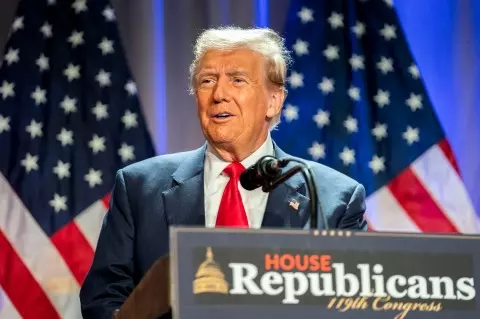
Global markets opened the week on edge after renewed tariff threats from former US President Donald Trump sent stocks lower, pushed investors toward safe-haven assets, and reignited fears of a fresh trade war.
While the immediate targets are European economies, the fallout could extend far beyond the US and Europe with real consequences for countries like Nigeria.
Historically, periods of global uncertainty trigger capital flight from emerging markets as investors retreat to safer assets such as the US dollar and gold. For Nigeria, this could mean increased pressure on the naira, tighter dollar liquidity, and higher costs for imported goods ranging from fuel to food and industrial inputs. With inflation already a major concern, any additional pressure from global markets risks deepening the cost-of-living crisis.
Oil prices are another key channel of impact. Crude prices slipped as markets reacted to the tariff threats and fears of slower global growth. For an oil-dependent economy like Nigeria’s, weaker oil prices translate directly into reduced government revenue, strained public finances, and less fiscal space for infrastructure and social spending.
Foreign investment is also likely to feel the strain. Heightened volatility often makes investors more cautious, delaying or redirecting funds away from frontier and emerging markets.
This could mean fewer portfolio inflows into Nigeria’s stock and bond markets and slower foreign direct investment at a time when the economy needs external capital to support growth and reforms.
Beyond the immediate risks, the moment also underscores a longer-term lesson for Nigeria. Global trade shocks repeatedly expose the dangers of overreliance on oil exports and imports for basic goods. As trade tensions rise and global markets wobble, the case for boosting local production, expanding non-oil exports, and deepening regional trade under the African Continental Free Trade Area (AfCFTA) becomes even more urgent.
In essence, while the tariff threats are aimed at Europe, their ripple effects could reach Nigeria through a weaker currency, higher prices, tighter government finances, and more cautious investors once again highlighting how closely Nigeria’s economic fortunes are tied to shifts in the global order.