
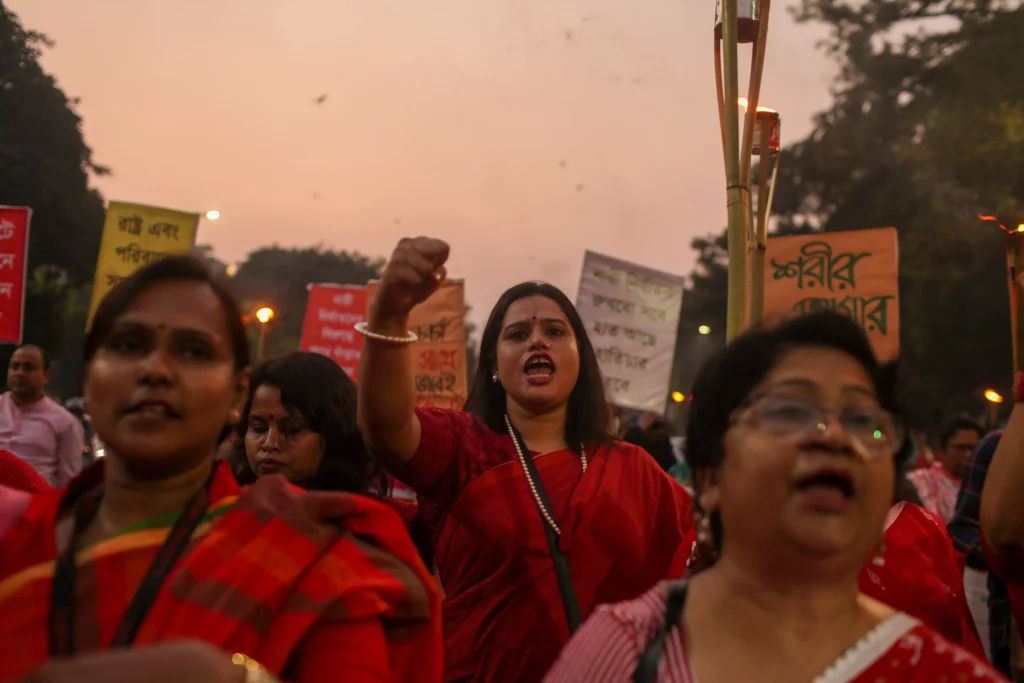
As Bangladesh prepares for its first general elections since the August 2024 Monsoon Revolution, concerns are mounting over escalating violence against women, girls, and religious minorities, raising questions about the interim government’s ability to safeguard fundamental rights.
The country is scheduled to go to the polls on February 12, but new data and reports from rights groups suggest a troubling rise in gender-based and communal violence in the months leading up to the vote. Police statistics show that cases of gender-based violence increased between January and June 2025 compared with the same period in 2024.
Dr. Fauzia Moslem, president of the Bangladesh Mahila Parishad, links the surge to growing activity and rhetoric from hardline religious groups seeking to limit women’s freedom of movement and participation in public life. In May 2025, such groups openly protested government efforts to advance gender equality, calling for an end to initiatives they described as “anti-Islamic.”
Since then, women and girls have faced heightened levels of verbal, physical, and digital abuse, creating a climate of fear that discourages victims from speaking out or seeking justice.
Violence has also intensified against religious minorities. In December, a 27-year-old Hindu garment worker, Dipu Chandra Das, was beaten to death by a mob over alleged blasphemy. Rights organisations report at least 51 incidents of violence against Hindus, including 10 killings. Ethnic minorities in the Chittagong Hill Tracts have also continued to report abuse by security forces in the post-revolution period.
Despite Bangladesh’s history of female political leadership and the prominent role women played in the 2024 student-led protests, women remain largely excluded from formal politics. Of the 51 political parties contesting the upcoming elections, 30 have not fielded a single woman candidate. Jamaat-e-Islami, one of the country’s major political parties, has nominated 276 candidates without including any women.
Rights advocates say the situation highlights the urgent need for reform. They are calling on the government to implement recommendations from the Women’s Affairs Reform Commission, including increasing women’s representation in parliament, aligning with the UN Security Council’s Women, Peace, and Security agenda, and fulfilling Bangladesh’s obligations under international treaties such as CEDAW and the ICCPR. They also stress the need to uphold constitutional protections for religious and ethnic minorities.
“These are not new demands,” activists argue. “They are commitments Bangladesh has repeatedly reaffirmed before and after the Monsoon Revolution.”
As election day approaches, pressure is growing on the interim government and political parties to demonstrate a genuine commitment to gender equality, minority rights, and the protection of all citizens principles many Bangladeshis hoped the revolution would finally secure.
By Naomi Jeremiah
Culled from: Human Rights Watch